

The 5 Interview Mistakes That Cost You the Job
What's silently killing your chances — and what top candidates do instead. Delivered instantly to your inbox.
No spam. Unsubscribe anytime. Privacy Policy & Terms
- Why "I'm a hard worker" destroys your chances
- What interviewers decide in the first 90 seconds
- How to handle tough questions with confidence
- The salary mistake almost every candidate makes
Last updated: April 7, 2026
Quick Answer: To stay calm in a job interview, combine physical techniques (controlled breathing, open body posture) with mental preparation (reframing anxiety as excitement, thorough practice). Research consistently shows that candidates who prepare structured responses and regulate their breathing before and during interviews perform measurably better and feel more in control. These strategies work for first-time job seekers and experienced professionals alike.
Key Takeaways
- Interview nerves are a normal neurological response — your brain is doing exactly what it’s designed to do under perceived pressure.
- Reframing anxiety as “excitement” rather than fear is a research-backed technique that genuinely improves performance.
- Controlled breathing (specifically box breathing or the 4-7-8 method) can reduce physical stress symptoms within 60 to 90 seconds.
- Preparation is the single most effective long-term strategy for reducing interview anxiety — it builds real confidence, not just the feeling of it.
- Body language affects your own mood as much as it affects the interviewer’s perception of you.
- Arriving early, sleeping well, and avoiding caffeine overload are simple logistical steps that significantly reduce pre-interview stress.
- Practising answers out loud — not just in your head — is one of the most underused and most effective interview preparation techniques.
- Anxiety and excitement feel almost identical in the body; the difference is the story you tell yourself about what those feelings mean.
Why Do Interview Nerves Happen in the First Place?
Interview nerves happen because your brain interprets a high-stakes social evaluation as a genuine threat. The amygdala — the brain’s threat-detection centre — triggers the fight-or-flight response, flooding your body with adrenaline and cortisol. This is the same neurological mechanism that helped your ancestors escape predators. In a job interview, it’s less useful.
This isn’t a character flaw or a sign you’re not ready. It’s biology. Understanding that helps.
What’s actually happening in your body:
- Your heart rate increases to pump more blood to your muscles
- Your breathing becomes shallower and faster
- Your palms may sweat as your body tries to cool itself
- Your mind may race or go blank as your brain prioritises survival over recall
- Your voice may shake as your vocal cords tighten under tension
According to a survey by interview coaching platform Interview Warmup (cited in research from 2023), over 92% of job seekers report experiencing significant anxiety before or during interviews. So if you’re sitting in a waiting room feeling your heart pound, you’re in very good company.
The good news: the stress response is manageable. And knowing why it happens is the first step in learning how to stay calm in a job interview when it matters most.
What Are the Most Common Physical Symptoms of Interview Anxiety?
The physical symptoms of interview anxiety are caused by adrenaline and cortisol — stress hormones released when your brain perceives a threat. They’re uncomfortable but not dangerous, and they’re more manageable than most people realise.
| Symptom | Why It Happens | What Helps |
|---|---|---|
| Racing heart | Adrenaline increases heart rate | Slow diaphragmatic breathing |
| Sweaty palms | Body cooling response | Cold water on wrists beforehand |
| Shaky voice | Vocal cord tension | Humming or speaking before entry |
| Mind going blank | Cortisol impairs short-term recall | Structured answer frameworks (STAR method) |
| Nausea or stomach knots | Gut-brain axis stress response | Light food 2 hours before, no caffeine excess |
| Blushing or flushing | Increased blood flow to skin | Reframing — it signals genuine engagement |
| Dry mouth | Reduced saliva production | Small sips of water, slow breathing |
One thing worth knowing: most interviewers cannot tell you’re as nervous as you feel. Research from the University of Chicago (Epley & Caruso, 2008) on the “illusion of transparency” shows that people consistently overestimate how visible their internal states are to others. Your nerves are far less obvious than they feel.
How to Stay Calm in a Job Interview: The Science-Backed Breathing Techniques
Controlled breathing is the fastest way to reduce interview anxiety because it directly activates the parasympathetic nervous system — the body’s “rest and digest” mode that counteracts the fight-or-flight response. You can shift your physiological state within 60 to 90 seconds using the right technique.
Box Breathing (Used by Navy SEALs and Performance Athletes)
This is one of the most effective and well-researched breathing techniques for acute stress reduction.
How to do it:
- Inhale slowly through your nose for 4 seconds
- Hold your breath for 4 seconds
- Exhale slowly through your mouth for 4 seconds
- Hold again for 4 seconds
- Repeat 4 to 6 cycles
Do this in the car, in the bathroom, or in the waiting area before your interview. It takes under two minutes and genuinely works.
The 4-7-8 Breathing Method
Developed by Dr. Andrew Weil and grounded in pranayama breathing traditions, this technique is particularly effective if your mind is racing.
- Inhale through your nose for 4 seconds
- Hold your breath for 7 seconds
- Exhale completely through your mouth for 8 seconds
- Repeat 3 to 4 times
The extended exhale is key — it signals safety to your nervous system and slows your heart rate more quickly than a standard breath.
During the Interview
If you feel a wave of nerves mid-interview, you don’t need to excuse yourself. Simply:
- Take one slow, deliberate breath before answering any question
- Pause briefly after the question is asked — this is normal and professional
- Drink water if it’s available (it also gives you a natural pause)
Breathing is the one physiological system you can control consciously, which makes it your most accessible tool for managing interview anxiety in real time.
How to Mentally Reframe Interview Stress So It Works For You
Mental reframing is the practice of changing the story you tell yourself about what your anxiety means. It’s one of the most powerful psychological tools for managing interview stress — and it’s backed by solid research.
Harvard Business School professor Alison Wood Brooks published research in 2014 showing that people who told themselves “I am excited” before a high-pressure performance task outperformed those who tried to calm themselves down. Anxiety and excitement share almost identical physiological signatures — the difference is interpretation.
Practical reframing techniques:
- “I am excited” not “I am nervous” — Say it out loud before you walk in. It sounds simple, and it works.
- Reframe the interview as a conversation, not a test — You’re also evaluating whether this role and company are right for you. That shifts the power dynamic in your mind.
- Treat nerves as a signal of caring — Feeling nervous means this matters to you. That’s not a weakness; it’s investment.
- Focus on what you can control — Your preparation, your posture, your breathing. Not the interviewer’s mood or the outcome.
Cognitive Behavioural Techniques for Interview Anxiety
Cognitive Behavioural Therapy (CBT) techniques are widely used by performance psychologists and career coaches to help people manage anxiety in high-stakes situations.
Try this before your interview:
- Write down your worst-case scenario thought (e.g., “I’ll go blank and embarrass myself”)
- Rate how likely that actually is on a scale of 1 to 10
- Write down the realistic outcome instead (e.g., “I might stumble on one answer but I’ll recover”)
- Write down what you’d say to a friend who had that fear
This process — called cognitive restructuring — breaks the catastrophising loop that makes interview anxiety spiral.
How to Stay Calm in a Job Interview Through Body Language
Your body language affects not just how the interviewer perceives you — it affects how you feel about yourself. This is the core insight from social psychologist Amy Cuddy’s research on “power posing,” and while the original study sparked debate, subsequent research has broadly supported the idea that expansive posture influences confidence and stress hormone levels.
Before the interview:
- Stand or sit in an open, expansive posture for 2 minutes before you enter (in a private space)
- Avoid hunching over your phone in the waiting room — it literally signals submission to your own nervous system
- Roll your shoulders back and lift your chin slightly
During the interview:
| Body Language Cue | What It Communicates | How It Affects You |
|---|---|---|
| Sitting up straight, leaning slightly forward | Engagement and confidence | Reduces cortisol, increases alertness |
| Maintaining natural eye contact | Trustworthiness and presence | Grounds you in the conversation |
| Keeping hands visible and relaxed | Openness and calm | Prevents fidgeting and self-soothing behaviours |
| Nodding naturally when listening | Active engagement | Keeps you mentally present |
| Smiling genuinely | Warmth and approachability | Triggers positive neurological feedback |
Common body language mistakes that increase anxiety:
- Crossing your arms (signals defensiveness — to yourself as much as to them)
- Avoiding eye contact (increases self-consciousness)
- Fidgeting with pens, rings, or hair (burns nervous energy but escalates anxiety)
- Speaking too fast (a sign of anxiety that also makes you feel more anxious)
Slow down your speech deliberately. It makes you sound more confident and gives your brain time to formulate complete thoughts.
What Should You Do to Prepare Mentally Before the Interview?
Mental preparation is the foundation of interview confidence. Practical preparation reduces uncertainty, and uncertainty is the main fuel for interview anxiety.
The week before:
- Research the company thoroughly — their mission, recent news, products, and culture
- Prepare structured answers using the STAR method (Situation, Task, Action, Result) for common questions
- Practise your answers out loud, not just in your head — this is critical
- Do a mock interview with a friend, family member, or in front of a mirror
- Prepare 3 to 5 questions to ask the interviewer — it signals genuine interest and gives you agency
If you’re worried about answering tricky questions, our guide on how to answer “Tell Me About Yourself” walks you through a clear structure with real examples. And if you’re not sure how to handle the “Why do you want this job?” question, this guide covers five strong example answers you can adapt.
The night before:
- Lay out your outfit, documents, and bag — decision fatigue is real, and eliminating morning stress helps
- Avoid alcohol (it disrupts sleep quality even in small amounts)
- Get at least 7 hours of sleep — sleep deprivation significantly impairs memory recall and emotional regulation
- Do something genuinely relaxing in the evening — a walk, a film, a good meal
The morning of:
- Eat a light, balanced meal 2 hours before (blood sugar stability supports cognitive function)
- Limit caffeine — one coffee is fine; three is a recipe for amplified anxiety symptoms
- Leave early enough to arrive 10 to 15 minutes before your slot
- Listen to music that makes you feel confident on the way there (this is genuinely backed by research on mood priming)
How Does Positive Self-Talk Help You Stay Calm During Interviews?
Positive self-talk directly influences performance by shaping the mental environment you perform in. It’s not about toxic positivity or pretending you’re not nervous — it’s about choosing accurate, encouraging internal dialogue over catastrophising.
Replace these thoughts with these:
| Unhelpful Self-Talk | Reframed Self-Talk |
|---|---|
| “I’m going to blank on every question” | “I’ve prepared well and I know this material” |
| “They’ll see right through me” | “I have real experience and genuine skills to offer” |
| “Everyone else is more qualified” | “I was invited because they see potential in me” |
| “I can’t afford to mess this up” | “One interview is one data point — not my whole future” |
| “I’m so nervous, I look ridiculous” | “I’m engaged and prepared — that’s what they’ll see” |
Developing a short personal mantra can also help. Something like: “I’m prepared, I’m capable, and I’m ready for this.” Repeat it before you walk in. It sounds basic, but repetition of positive statements has measurable effects on cortisol levels and performance anxiety, according to research published in the journal Health Psychology (Creswell et al., 2013).
If you’re heading into an interview without much formal experience, the self-talk challenge is even harder. Our guide on what to say when you have no experience in an interview can help you build a more accurate, confident internal narrative about your transferable skills.
Are There Technology Tools That Can Help With Interview Anxiety?
Yes — and this is an area most interview advice articles completely ignore. Technology-assisted anxiety management is a legitimate and growing field, and several tools are worth knowing about.
Apps for stress and anxiety management:
- Calm and Headspace — Both offer guided breathing and meditation sessions specifically designed for performance anxiety. Even a 10-minute session the morning of an interview can lower baseline cortisol.
- Wim Hof Method app — Guided breathwork based on cold exposure and controlled hyperventilation. Effective for acute stress reduction.
- Insight Timer — Free guided meditations, including several specifically for confidence and public speaking anxiety.
AI-powered interview practice tools:
- Google’s Interview Warmup — A free tool that lets you practise answers to common interview questions and gives feedback on your responses
- Yoodli — An AI speech coach that analyses your pacing, filler words, and clarity in real time
- Big Interview — A structured platform for mock interviews with video playback so you can see your own body language
Wearable technology:
Devices like the Oura Ring and Apple Watch can track heart rate variability (HRV) — a reliable physiological marker of stress and recovery. Monitoring your HRV in the days before an interview gives you real data on whether your nervous system is regulated or depleted, and lets you adjust your sleep, nutrition, and stress management accordingly.
These tools won’t replace preparation, but they’re genuinely useful additions to your interview confidence toolkit.
Does Interview Anxiety Differ Across Cultures?
This is another angle that most interview guides skip entirely. The experience and expression of interview anxiety varies meaningfully across cultural contexts, and understanding this matters — especially if you’re interviewing for international roles or in multicultural workplaces.
Key cultural differences:
- In many East Asian professional cultures, expressing confidence or speaking extensively about personal achievements can feel uncomfortable or even inappropriate. Candidates from these backgrounds may experience heightened anxiety when asked to “sell themselves” in Western-style interviews.
- In some cultures, maintaining eye contact is a sign of respect and confidence. In others, prolonged eye contact can feel confrontational or disrespectful.
- Collectivist cultures (common across South and East Asia, Latin America, and parts of Africa) tend to frame achievements in terms of team contributions rather than individual wins — which can create anxiety when interviewers ask “What did you specifically achieve?”
Practical advice:
- If you’re interviewing in a culture different from your own, research the interview norms for that specific country or company culture
- It’s entirely appropriate to frame team achievements and then clarify your specific role within them
- If cultural differences in self-promotion cause anxiety, practise framing your contributions in ways that feel authentic while still being clear to the interviewer
Understanding that your anxiety may have cultural roots — not just personal ones — can itself be a powerful reframe.
Pre-Interview Calm Checklist
Use this checklist in the 24 hours before your interview to manage anxiety systematically.
The night before:
- [ ] Outfit prepared and laid out
- [ ] Route and travel time confirmed
- [ ] Documents printed or saved (CV, portfolio, references)
- [ ] 3 to 5 interview questions prepared
- [ ] STAR answers practised out loud for likely questions
- [ ] Phone charged
- [ ] Alarm set (with a backup)
- [ ] Early night — aim for 7 to 8 hours of sleep
The morning of:
- [ ] Light, balanced breakfast eaten
- [ ] Caffeine limited to one cup
- [ ] Box breathing or 4-7-8 breathing practised for 5 minutes
- [ ] Confidence playlist on during travel
- [ ] Arrived 10 to 15 minutes early
- [ ] Power posture held for 2 minutes before entering
- [ ] Water available if possible
In the waiting room:
- [ ] Sitting upright (not hunched over phone)
- [ ] Breathing slowly and deliberately
- [ ] Repeating personal mantra quietly
- [ ] Reviewing 2 to 3 key points you want to make
Long-Term Strategies for Building Interview Confidence
If interview anxiety is a recurring challenge for you, short-term techniques will only take you so far. Building genuine, durable confidence requires longer-term psychological work.
Practise high-stakes communication regularly:
Seek out opportunities to speak in front of others — presentations at work, joining a local Toastmasters group, or even taking part in community events. Each experience builds your tolerance for performance pressure and trains your nervous system to stay regulated under scrutiny.
Debrief after every interview:
Whether it goes well or not, write down:
- What you handled well
- One thing you’d do differently
- What you learned about yourself
This turns every interview into a training session rather than a pass/fail test.
Work with a career coach or therapist:
If interview anxiety is severe — causing you to avoid applying for roles, or significantly impairing your performance — it’s worth speaking to a professional. Career coaches can help with practical preparation and confidence building. Therapists trained in CBT can help address deeper anxiety patterns.
Build your interview knowledge base:
The more you understand about how interviews work, what interviewers are actually looking for, and how to structure strong answers, the less uncertainty you carry into the room. Explore our career tips and interview guides on the LovePDFGuides blog for practical, no-fluff resources you can use right now.
FAQ: How to Stay Calm in a Job Interview
Q: Is it normal to feel nervous before a job interview?
Yes — over 90% of job seekers report significant interview anxiety. It’s a normal neurological response to a high-stakes social evaluation, not a sign of weakness or unpreparedness.
Q: How can I calm my nerves immediately before walking into an interview?
Do 4 to 6 rounds of box breathing (inhale 4 seconds, hold 4, exhale 4, hold 4) in a private space. Stand in an open, upright posture. Repeat a short confidence mantra. These three steps take under 3 minutes and measurably reduce acute stress symptoms.
Q: What should I do if my mind goes blank during an interview?
Pause, take a slow breath, and say: “That’s a great question — let me take a moment to think.” Interviewers respect thoughtful pauses. If you genuinely can’t recall something, it’s fine to say: “I’d want to give you a considered answer on that — could I come back to it?” Then move forward.
Q: Does caffeine make interview anxiety worse?
Yes, for most people. Caffeine amplifies the physical symptoms of anxiety — heart rate, jitteriness, and restlessness. Limit yourself to one cup before an interview and avoid energy drinks entirely.
Q: How long does it take to build genuine interview confidence?
It varies, but most people notice meaningful improvement after 3 to 5 structured practice sessions. Long-term confidence builds through repeated exposure to high-stakes communication over months, not days.
Q: Should I tell the interviewer I’m nervous?
Generally, no — unless it’s causing a visible problem (like a very shaky voice). Most interviewers can’t tell how nervous you are internally. Mentioning it can draw unnecessary attention to it. Focus on your breathing and your answers instead.
Q: Can mindfulness meditation actually help with interview anxiety?
Yes. Research published in journals including Mindfulness and Psychological Science supports the use of brief mindfulness practices for reducing performance anxiety. Even a 10-minute guided session the morning of an interview can lower baseline stress levels.
Q: What’s the best thing to do the night before an interview to reduce anxiety?
Prepare everything you need (outfit, documents, route), practise your key answers out loud one final time, then stop preparing and do something genuinely relaxing. Over-rehearsing the night before increases anxiety rather than reducing it.
Q: Does it help to visualise the interview going well?
Yes — but specific visualisation works better than vague positive thinking. Mentally walk through the interview step by step: entering confidently, shaking hands, answering questions calmly, asking your prepared questions. This primes your brain for the actual experience.
Q: What if I’ve had a bad interview experience before that’s affecting my confidence now?
Acknowledge it rather than suppressing it. Write down what happened, what you learned, and what you’d do differently. Then actively work to separate that experience from this one — different company, different interviewers, different you. Each interview is genuinely a fresh start.
Conclusion
Learning how to stay calm in a job interview is a skill — and like any skill, it improves with understanding and practice. You don’t need to eliminate nerves entirely. In fact, a moderate level of arousal actually improves performance. What you’re aiming for is regulated nerves, not zero nerves.
Start with the basics: prepare thoroughly, breathe deliberately, and reframe anxiety as excitement. Add in body language awareness, positive self-talk, and a solid pre-interview routine. Over time, these techniques stop being things you consciously do and become part of how you naturally show up in high-stakes situations.
Your actionable next steps:
- This week: Practise box breathing for 5 minutes daily until it feels automatic
- Before your next interview: Use the pre-interview calm checklist above
- Right now: Read our guides on answering “Tell Me About Yourself” and answering “Why Do You Want This Job?” — preparation is the most powerful anxiety reducer there is
- If you’re newer to interviews: Check out our guide on what to say when you have no experience to build a confident, honest narrative around your transferable skills
- For ongoing support: Explore the full range of career tips and practical guides on the LovePDFGuides blog
You’ve got this. The nerves mean you care — and caring is exactly what good employers are looking for.
References
- Brooks, A. W. (2014). Get excited: Reappraising pre-performance anxiety as excitement. Journal of Experimental Psychology: General, 143(3), 1144–1158.
- Creswell, J. D., Dutcher, J. M., Klein, W. M. P., Harris, P. R., & Levine, J. M. (2013). Self-affirmation improves problem-solving under stress. PLOS ONE, 8(5), e62593.
- Epley, N., & Caruso, E. M. (2008). Perspective taking: Misstepping into others’ shoes. In K. D. Markman, W. M. P. Klein, & J. A. Suhr (Eds.), Handbook of imagination and mental simulation. Psychology Press.
- American Psychological Association. (2022). Stress in America 2022: Concerned for the future, beset by inflation. APA.
- Cuddy, A. J. C., Wilmuth, C. A., Yap, A. J., & Carney, D. R. (2015). Preparatory power posing affects nonverbal presence and job interview performance. Journal of Applied Psychology, 100(4), 1286–1295.
- Kabat-Zinn, J. (2003). Mindfulness-based interventions in context: Past, present, and future. Clinical Psychology: Science and Practice, 10(2), 144–156.
Meta Title: How to Stay Calm in a Job Interview When Nervous
Meta Description: Feeling nervous before a job interview? Learn science-backed breathing techniques, mental reframing strategies, and expert preparation tips to stay calm and confident.
Tags: interview nerves, managing interview anxiety, how to stay calm in a job interview, interview confidence tips, overcoming interview stress, mental preparation for interviews, interview mindset, stress management techniques, breathing techniques for anxiety, interview preparation, job interview tips, performance anxiety
Your Next Chapter
Starts with the Right Guide
Three straight-talking PDF guides to help you win interviews, beat the first 90 days and thrive as an introvert. Instant download on Gumroad.
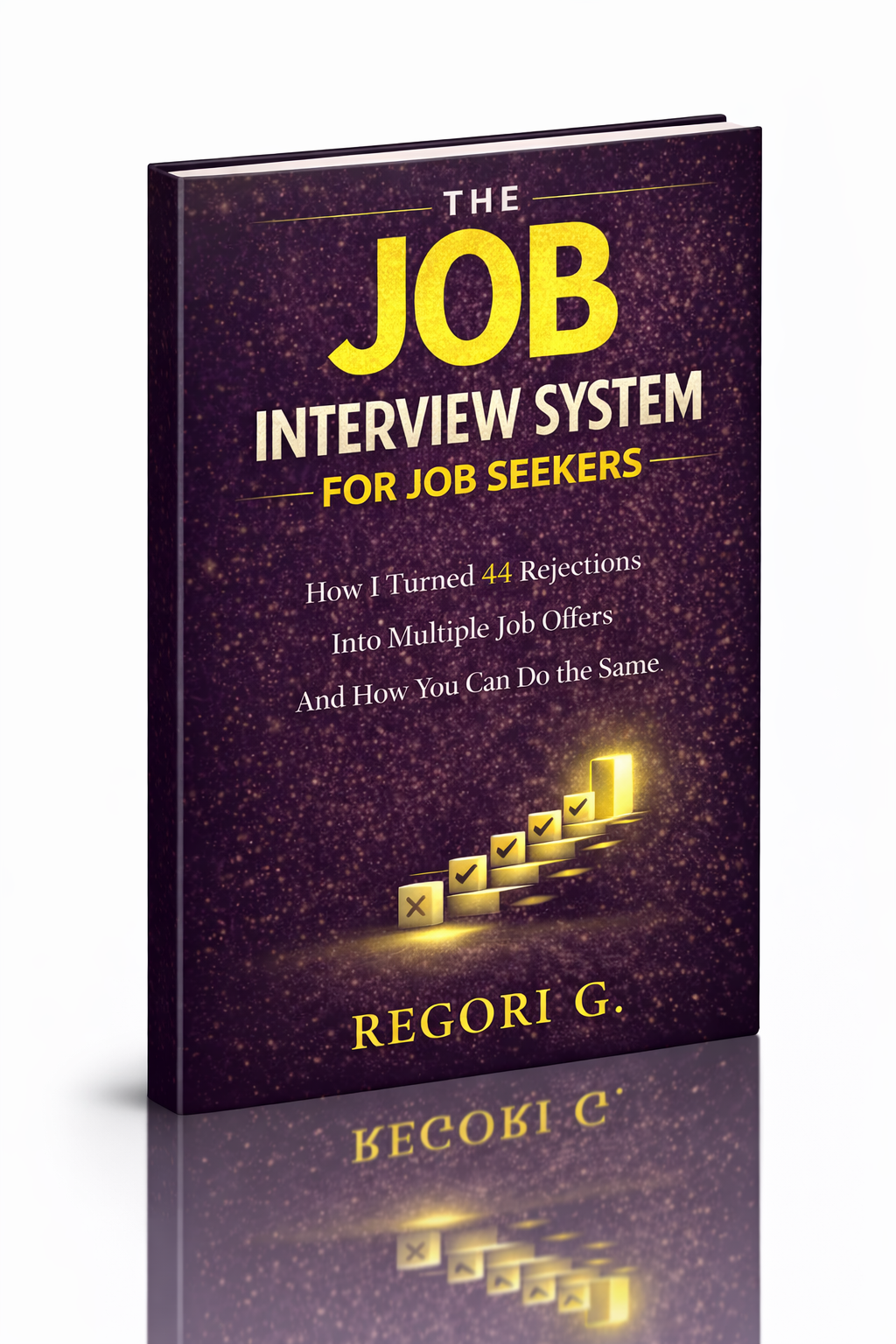
Guide 01
The Job Interview System
Step-by-step interview prep that turns nerves into confidence.
Get it →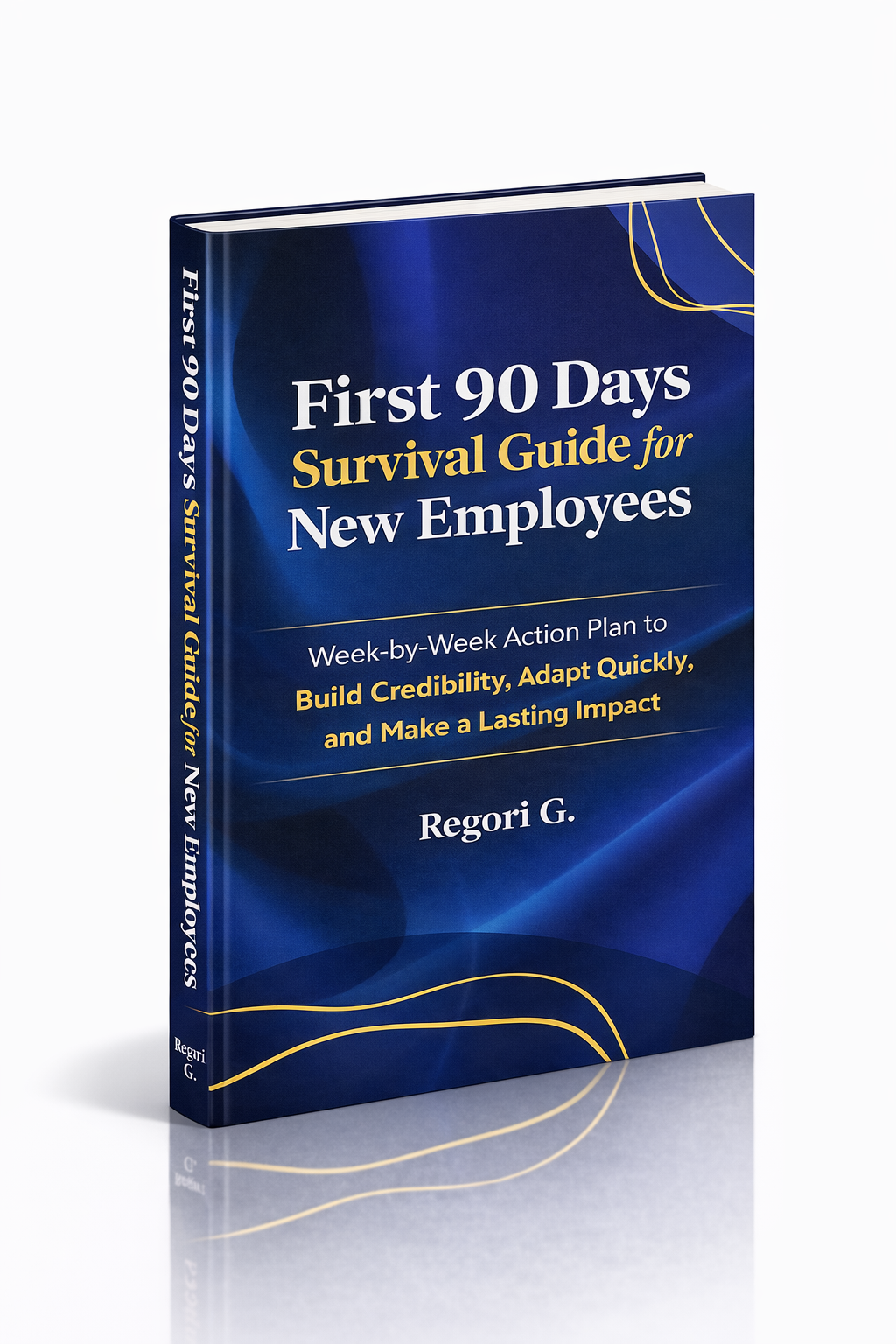
Guide 02
First 90 Days Survival Guide
Hit the ground running and make your mark from day one.
Get it →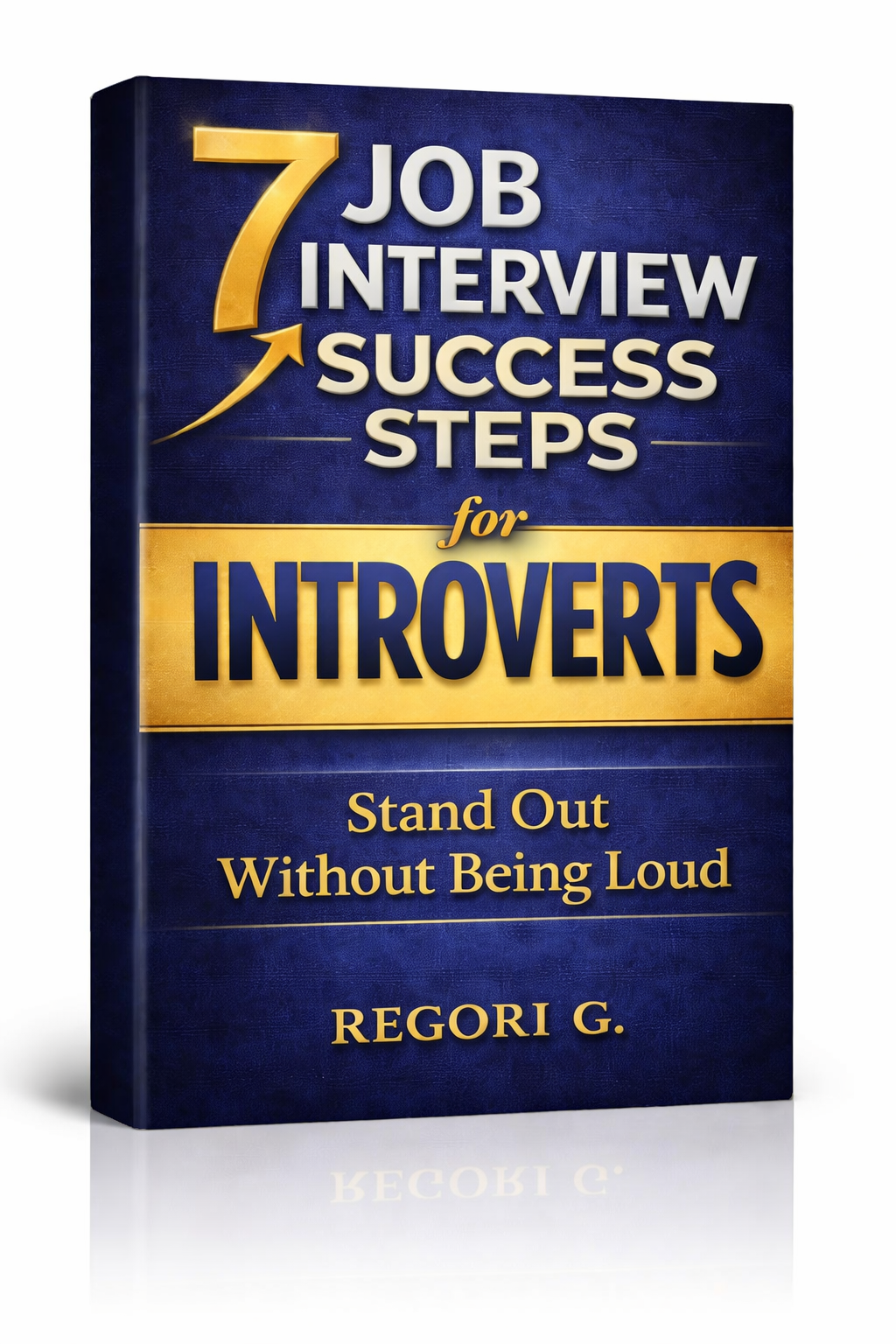
Guide 03
Interview Success for Introverts
7 proven steps to shine in interviews — even if you hate the spotlight.
Get it →